
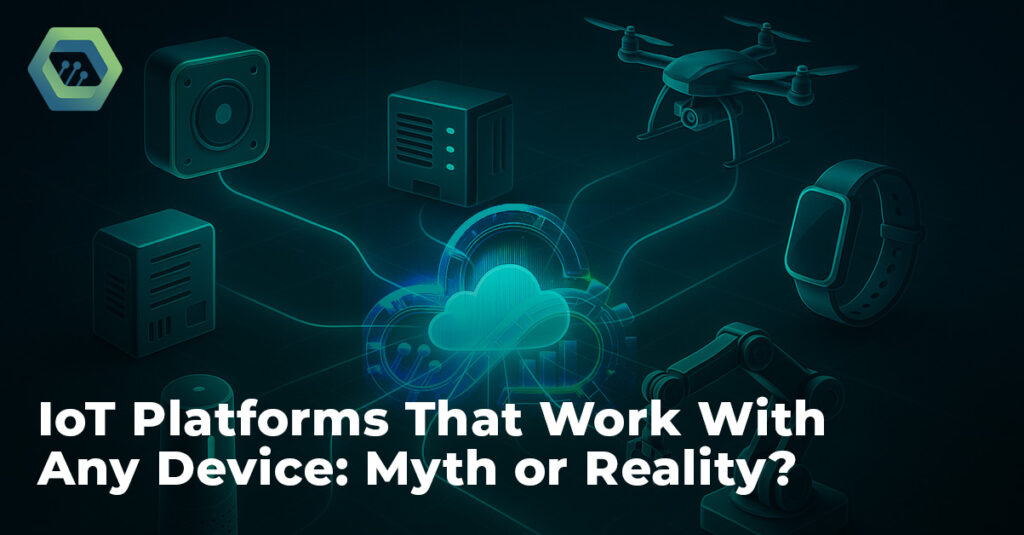
The Internet of Things (IoT) is no longer just a futuristic idea—it’s here, and it’s everywhere. From smart homes and connected cars to advanced manufacturing plants and smart cities, IoT devices are transforming the way we live and work. But as industries adopt more devices, one question keeps coming up: Can IoT platforms really work with any device?
At first glance, the idea of one IoT platform supporting every type of device sounds like a dream. Imagine a single dashboard where you can connect factory sensors, wearable health trackers, parking cameras, and smart lighting systems—all in one place. But is this dream practical or just hype? Let’s break it down.
What Is an IoT Platform?
An IoT platform is a software and hardware ecosystem that connects, manages, and analyzes data from IoT devices. Think of it as the backbone of any IoT solution—it allows devices to communicate with each other and with business applications.
An IoT platform typically offers:
- Device connectivity – allowing devices to connect using protocols like MQTT, CoAP, or HTTP.
- Device management – onboarding, updating, and monitoring devices remotely.
- Data processing – collecting, storing, and analyzing sensor data.
- Application enablement – turning data into actionable insights through dashboards and APIs.
Without an IoT platform, devices would work in silos. With it, you can build scalable, intelligent systems.
The Challenge: Different Devices, Different Needs
Here’s where things get tricky. Not all IoT devices are created equal. For example:
- A temperature sensor in a warehouse sends small bursts of data every few minutes.
- A CCTV camera in a smart city sends high-bandwidth video streams.
- A wearable health tracker needs real-time monitoring and strict data security.
- A factory robot requires ultra-low latency to function correctly.
Trying to fit all these into a single IoT platform is like trying to use one charger for every electronic gadget in your house—it might work for some, but not all.
Myth vs. Reality: Do IoT Platforms Work With Any Device?
Let’s address the core question.
- Myth: All IoT platforms can work with any device without limitations.
- Reality: Most IoT platforms support a wide range of devices, but compatibility depends on communication protocols, industry standards, and integration capabilities.
Some platforms are industry-specific—for example, healthcare IoT platforms focus on compliance (HIPAA), while industrial IoT platforms emphasize machine data and predictive maintenance. Others, called multi-device IoT platforms, are designed to support devices across sectors, but they still need customization.
Why Multi-Device Compatibility Matters
Businesses today rarely operate with just one type of device. A manufacturing company, for example, may use:
- Energy sensors to track electricity consumption
- Security cameras for safety
- RFID trackers for inventory
- Robotics for automation
If the IoT platform doesn’t support multi-device integration, companies end up with multiple dashboards, fragmented data, and higher costs. A platform that works with any device simplifies operations and creates a single source of truth.
Features of a True Multi-Device IoT Platform
So what makes an IoT platform truly versatile? Here are the must-have features:
- Protocol Flexibility
Supports multiple IoT communication standards like LoRaWAN, NB-IoT, Zigbee, Wi-Fi, and Bluetooth. - Scalability
Can handle a few hundred sensors today and millions of devices tomorrow without performance issues. - Edge and Cloud Support
Processes data both locally (for speed) and in the cloud (for deeper analytics). - Security
Provides strong encryption, secure authentication, and compliance with data regulations. - Custom Dashboards
Allows businesses to visualize data from different devices on one interface. - Open APIs
Makes it easier to integrate third-party devices and applications.
Real-World Scenarios
Let’s look at how multi-device IoT platforms are used across industries:
- Smart Agriculture
Farmers use IoT to monitor soil moisture, weather, and livestock health—all from different sensors and devices. A multi-device IoT platform pulls this data together to guide decisions. - Healthcare
Hospitals track patient vitals using wearables, monitor building conditions (like temperature and air quality), and manage medical equipment usage. One platform for all reduces complexity. - Manufacturing
Factories deploy predictive maintenance sensors, energy monitors, and robotics systems. A versatile platform ensures seamless integration for Industry 4.0. - Smart Cities
From traffic lights to pollution monitors and surveillance systems, cities rely on IoT platforms to centralize management and create safer, smarter environments.
The Future: Toward True “Any Device” Platforms
While no platform is 100% universal yet, the industry is moving fast. With standardization efforts and advancements in AI-driven integration, future IoT platforms will come closer to supporting any device out of the box.
Technologies like 5G and edge computing are also making platforms more adaptable, reducing latency and supporting real-time decision-making across devices.
OmniWOT’s Take on Multi-Device IoT
At OmniWOT, we believe that IoT platforms should be flexible, scalable, and device-agnostic. Our platform is designed to work with multiple industries—manufacturing, healthcare, agriculture, mining, facility management, and more.
With support for diverse communication protocols, role-based dashboards, and advanced analytics, OmniWOT ensures that businesses don’t have to choose between devices or industries. Instead, they get one platform that grows with them.
Conclusion
So, are IoT platforms that work with any device a myth or reality? The answer lies somewhere in between. While no platform can instantly support every device in existence, the best IoT platforms are getting closer to that vision.
For businesses, the key is to choose a platform that offers flexibility, scalability, and future-proofing—one that doesn’t lock them into limited devices or specific industries.And that’s where providers like OmniWOT stand out. With a strong focus on cross-industry compatibility and real-time insights, OmniWOT helps businesses unlock the true potential of IoT—no matter what devices they use.