
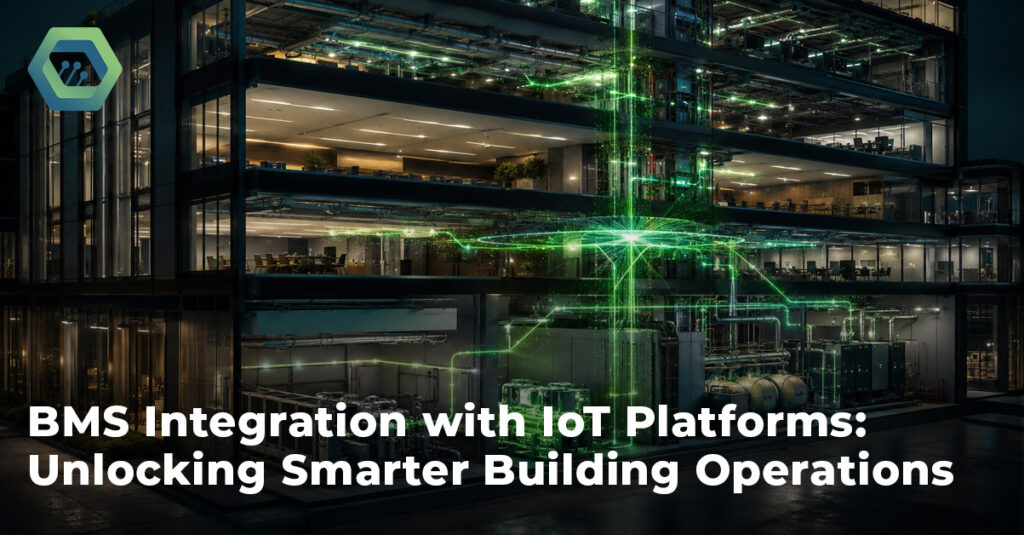
Modern buildings are becoming increasingly intelligent.
But intelligence alone is not enough—
integration is what unlocks real operational value.
Most commercial buildings today already operate with Building Management Systems (BMS).
However, many of these systems still function in isolation, limiting visibility, automation, and scalability.
By integrating BMS with a unified IoT platform, organizations can transform traditional infrastructure into connected, data-driven smart buildings.
What is BMS Integration?
A Building Management System (BMS) controls and monitors critical building infrastructure such as:
• HVAC systems
• Chillers & AHUs
• Lighting systems
• Fire alarm systems
• Energy meters
• Elevators & utilities
Traditionally, these systems operate independently through separate dashboards and protocols.
BMS integration connects these systems into a centralized IoT platform, enabling real-time monitoring, automation, and intelligent decision-making.
The Problem with Traditional BMS Environments
Many buildings still face operational limitations due to siloed systems.
Common Challenges:
• Separate interfaces for each subsystem
• Limited real-time analytics
• Manual monitoring and reporting
• Delayed fault detection
• High operational and energy costs
As buildings scale, these disconnected systems create operational inefficiencies and blind spots.
👉 Buildings generate data.
👉 But without integration, that data remains underutilized.
Why IoT is Transforming Building Operations
IoT acts as the intelligence layer above traditional BMS infrastructure.
By integrating sensors, controllers, and building systems into one platform, organizations gain:
• Real-time visibility
• Centralized control
• Predictive insights
• Automated workflows
• Multi-site monitoring
👉 Buildings evolve from static infrastructure into intelligent ecosystems.
How BMS Integration Works
Modern BMS integration platforms connect multiple protocols and systems into a single operational layer.
Integrated Systems Include:
• HVAC (AHUs, FCUs, Chillers)
• Lighting control systems
• Energy meters
• Fire alarm & suppression systems
• UPS & generator monitoring
• Access control & security systems
Supported Protocols:
• BACnet
• Modbus
• OPC-UA
• MQTT
• CANbus
• Industrial Ethernet
This creates seamless communication between systems that previously operated independently.
The Role of Unified IoT Platforms
A unified IoT platform acts as the centralized intelligence hub for building operations.
Instead of switching between multiple dashboards, facility teams can:
• Monitor all systems from one interface
• Receive real-time alerts
• Analyze operational trends
• Automate workflows
• Benchmark multiple facilities
👉 One Platform. One View. Total Visibility.
Key Benefits of BMS + IoT Integration
1. Real-Time Monitoring
Monitor critical building systems instantly across all facilities.
This includes:
• Temperature and environmental conditions
• HVAC performance
• Energy consumption
• Equipment health
2. Energy Optimization
Energy is one of the largest operational expenses in commercial buildings.
Integrated IoT platforms help organizations:
• Identify inefficiencies
• Optimize HVAC schedules
• Reduce unnecessary energy consumption
• Improve sustainability performance
👉 Smarter energy management = Lower operational costs
3. Predictive Maintenance
Traditional maintenance is reactive.
With IoT-enabled BMS integration:
• Equipment anomalies are detected early
• Failures can be predicted
• Maintenance workflows become automated
Result:
✔ Reduced downtime
✔ Extended asset life
✔ Lower maintenance costs
4. Centralized Multi-Site Operations
Organizations managing multiple buildings need unified operational visibility.
Integrated platforms enable:
• Portfolio-wide monitoring
• Centralized command centers
• Cross-site benchmarking
• Standardized operations
5. Improved Occupant Experience
Smart buildings directly impact occupant comfort and productivity.
IoT-enabled BMS systems improve:
• Indoor air quality
• Thermal comfort
• Lighting efficiency
• Response times to issues
👉 Better environments create better experiences.
From Building Automation to Building Intelligence
Traditional BMS focused on automation.
Modern IoT platforms enable:
✔ Intelligent analytics
✔ Cross-system correlation
✔ AI-driven insights
✔ Autonomous optimization
This shift is transforming buildings from:
❌ Automated systems
to
✅ Intelligent operational ecosystems
Real-World Use Cases
Commercial Buildings
Centralized HVAC, lighting, and energy optimization
Hospitals
Critical environmental monitoring and uptime management
Campuses
Multi-building operational visibility and efficiency
Industrial Facilities
Integrated monitoring of utilities and infrastructure
Challenges in BMS Integration
Despite the benefits, organizations often face:
• Legacy infrastructure compatibility
• Multiple communication protocols
• Data silos
• Integration complexity
Modern IoT platforms solve this through:
✔ Multi-protocol support
✔ Retrofit-friendly architecture
✔ Edge-to-cloud integration
✔ Scalable deployment models
The Future of Smart Building Operations
The future of building management includes:
• AI-powered automation
• Digital twins
• Autonomous energy optimization
• Real-time operational intelligence
BMS integration will become the foundation for:
👉 Smart buildings
👉 Smart campuses
👉 Smart cities
OmniWOT: Enabling Intelligent Building Operations
OmniWOT unifies BMS systems, IoT devices, sensors, and analytics into a single enterprise platform.
Organizations gain:
• Unified dashboards
• Real-time alerts
• Multi-site visibility
• Predictive maintenance
• Energy optimization
👉 Transforming buildings into connected, intelligent environments.
Conclusion
BMS systems are no longer just control systems—
they are becoming strategic intelligence platforms.
By integrating BMS with IoT, organizations can:
• Improve operational efficiency
• Reduce costs
• Optimize energy usage
• Enhance occupant experience
• Enable data-driven decision-making
👉 From isolated systems to intelligent building ecosystems
FAQ (AEO OPTIMIZED)
What is BMS integration with IoT?
BMS integration with IoT connects building systems like HVAC, lighting, and energy monitoring into a centralized intelligent platform.
Why is BMS integration important?
It improves operational visibility, energy efficiency, automation, and predictive maintenance.
What systems can be integrated into a BMS platform?
HVAC, lighting, fire alarms, energy meters, UPS, generators, and security systems.
How does IoT improve building operations?
IoT enables real-time monitoring, automation, analytics, and centralized control across building systems.