

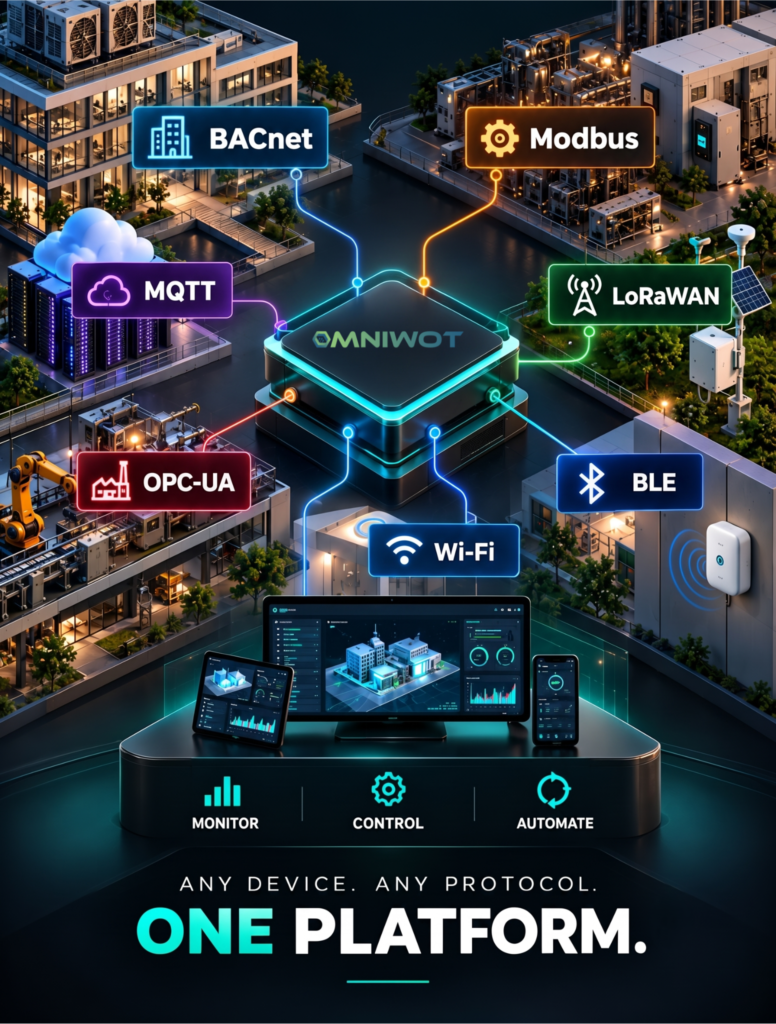
How to Integrate BACnet, Modbus, MQTT, and LoRaWAN into One IoT Platform
A modern building or industrial facility rarely uses just one communication protocol. For example, a commercial building may already have BACnet for HVAC and BMS, Modbus energy meters, LoRaWAN wireless sensors, and MQTT-based IoT devices.
The problem is simple: How do you monitor all of them from one place?
A Real-World Example
Imagine a facility manager wants to monitor energy consumption, HVAC performance, and indoor conditions across a large building. The existing systems may look like this:
-
HVAC / BMS $\rightarrow$ BACnet
-
Energy Meters $\rightarrow$ Modbus
-
Temperature & Water Level Sensors $\rightarrow$ LoRaWAN
-
IoT Applications $\rightarrow$ MQTT
Instead of replacing these systems, a multi-protocol IoT platform connects them and brings the data into one common platform. The facility manager can then see:
-
Energy consumption
-
HVAC status
-
Temperature and humidity
-
Water tank levels
-
Equipment alarms
-
Historical trends
—all from a single dashboard.
Why This Approach Is Practical
Organizations don’t need to replace their existing infrastructure to start an IoT project. A practical approach is:
-
Connect existing systems
-
Add required IoT sensors
-
Bring data into one platform
-
Create dashboards & alerts
-
Automate where required
This reduces infrastructure replacement costs and avoids being locked into a single hardware manufacturer or communication protocol. The same approach can be applied to factories, commercial buildings, hospitals, campuses, utilities, and multiple-site operations.
The Goal
The goal isn’t to collect more data. It’s to make existing operational data visible, useful, and actionable. A unified IoT platform should provide:
-
Connectivity $\rightarrow$ Monitoring $\rightarrow$ Analytics $\rightarrow$ Alerts $\rightarrow$ Control $\rightarrow$ Automation
At OmniWOT, our approach is: Any Device. Any Protocol. One Platform.
Connect BACnet, Modbus, MQTT, LoRaWAN, and other technologies through one vendor-neutral, hardware-agnostic IoT platform.