

How to Reduce HVAC Energy Consumption Using BMS
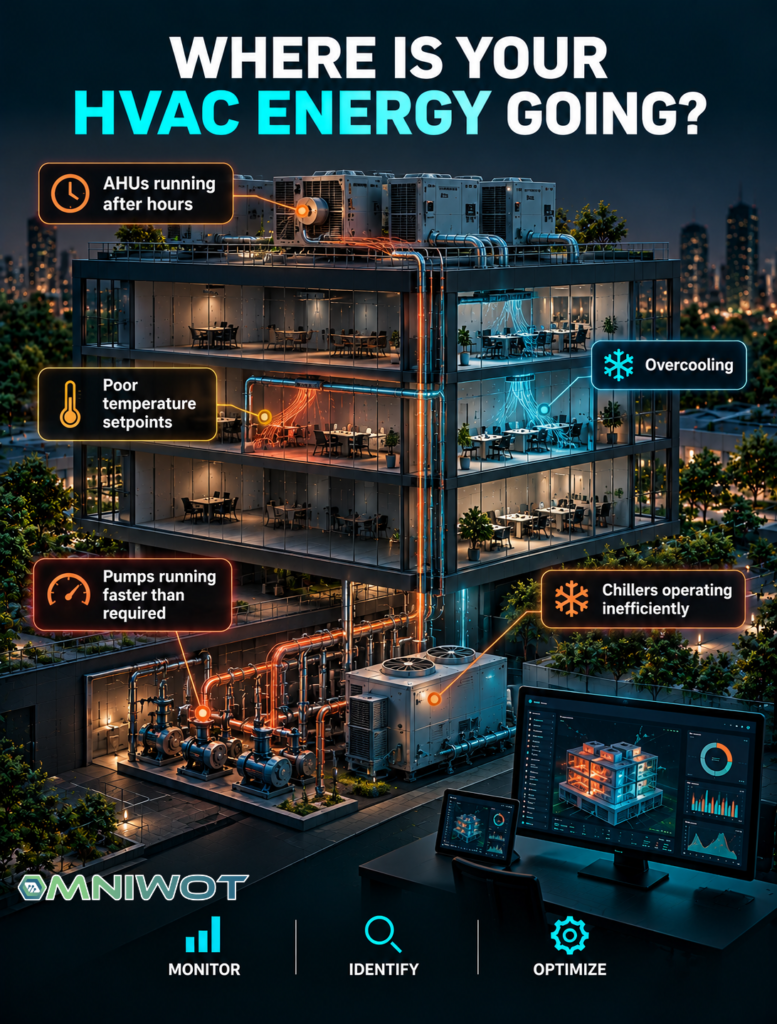
HVAC is often one of the largest energy consumers in a commercial building. But high energy consumption doesn’t always mean inefficient equipment. Energy is often wasted because of unnecessary runtime, poor setpoints, overcooling, or inefficient operation.
Managing HVAC Energy Consumption effectively is crucial for commercial buildings
A Real-World Example
Imagine an office building where AHUs and pumps continue running after working hours. The equipment may be functioning correctly, but the building is still consuming energy when cooling isn’t required.
A Building Management System (BMS) can help by monitoring and controlling:
-
AHU and pump operating hours
-
Temperature setpoints
-
Chiller performance
-
Occupancy and schedules
-
Energy consumption
For example:
-
Occupied: Normal HVAC operation
-
Low occupancy: Reduced cooling
-
After hours: HVAC shutdown
The key difference is that energy monitoring tells you how much energy is being consumed, while BMS-based optimization helps identify why and reduce unnecessary consumption.
The Practical Approach
Monitor $\rightarrow$ Analyze $\rightarrow$ Optimize $\rightarrow$ Automate
With the right BMS strategy, buildings can improve occupant comfort while reducing unnecessary HVAC energy consumption.
The goal isn’t to run HVAC less. It’s to run it smarter.
Explore BMS and building automation solutions from OmniWOT: OmniWOT Building Automation
#BMS #HVAC #EnergyManagement #HVACOptimization #BuildingAutomation #EnergyEfficiency