
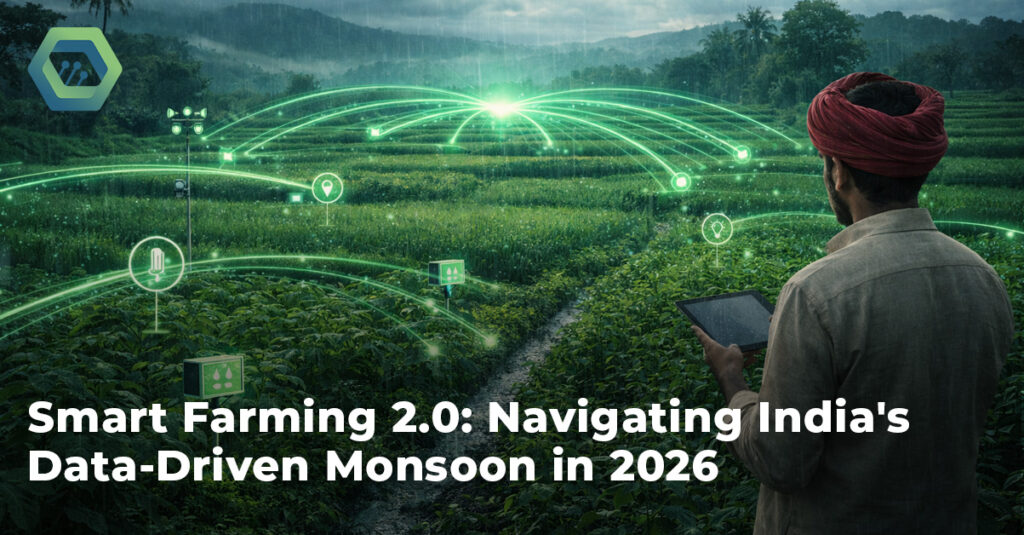
Agriculture in India has always been deeply connected to the monsoon.
But in 2026, farming is no longer just about experience and intuition—
it’s about data, precision, and real-time decision-making.
Welcome to Smart Farming 2.0, where IoT is transforming how farmers respond to unpredictable monsoon patterns and optimize crop outcomes.
The Challenge: Unpredictable Monsoons
Indian agriculture depends heavily on seasonal rainfall.
However, changing climate patterns have made monsoons increasingly unpredictable.
Farmers today face:
• Irregular rainfall patterns
• Soil moisture imbalance
• Crop stress due to sudden weather shifts
• Water wastage or shortage
• Reduced yield predictability
👉 Traditional farming methods are no longer enough
What is Smart Farming 2.0?
Smart Farming 2.0 refers to the use of IoT, sensors, and data analytics to make agriculture more precise, efficient, and resilient.
It enables farmers to monitor, analyze, and act on real-time data—rather than relying on assumptions.
In simple terms:
From guess-based farming → data-driven farming
The Role of IoT in Modern Agriculture
IoT is the backbone of Smart Farming 2.0.
Connected sensors placed across fields collect critical data such as:
• Soil moisture levels
• Temperature and humidity
• Rainfall patterns
• Soil conditions
• Environmental changes
This data is transmitted to a centralized platform, enabling real-time monitoring and decision-making.
Smart Farming During the Monsoon
Monsoon is the most critical phase for Indian agriculture.
IoT helps farmers make better decisions during this period:
1. Soil Moisture Monitoring
Avoid over-irrigation during heavy rainfall and prevent water stress during dry spells.
2. Weather-Based Decision Making
Use real-time weather data to plan irrigation, fertilization, and harvesting.
3. Crop Health Monitoring
Detect early signs of stress caused by excess or insufficient rainfall.
4. Flood & Risk Alerts
Get alerts for extreme weather conditions to minimize damage.
Precision Irrigation & Water Optimization
Water management is one of the biggest challenges in agriculture.
IoT-enabled systems allow:
• Automated irrigation based on soil moisture
• Reduced water wastage
• Improved crop health
• Optimized resource usage
👉 Result: Higher yield with lower resource consumption
Data-Driven Farming Decisions
With IoT platforms, farmers can:
• Access real-time dashboards
• Analyze trends and patterns
• Predict crop outcomes
• Make informed decisions quickly
👉 Farming becomes predictable, scalable, and efficient
Benefits of Smart Farming 2.0
1. Increased Crop Yield
Better monitoring leads to healthier crops
2. Reduced Risk
Early alerts help prevent crop damage
3. Cost Efficiency
Optimize water, fertilizers, and labor
4. Sustainability
Reduce resource wastage and improve environmental impact
5. Scalability
Manage large farms with minimal manual effort
IoT Platforms: The Backbone of Smart Agriculture
Sensors alone are not enough.
The real value comes from platforms that unify and analyze data.
A unified IoT platform enables:
• Centralized monitoring of fields
• Real-time alerts and insights
• Automated workflows
• Multi-site farm management
👉 Turning raw data into actionable intelligence
Real-World Use Cases in India
Small & Mid-Scale Farms
Affordable sensors help farmers make better irrigation decisions
Large Agricultural Enterprises
Manage multiple farms with centralized dashboards
Agri-Tech Companies
Provide data-driven services to farmers
Government Projects
Smart irrigation and climate monitoring initiatives
The Future of Smart Farming in India
The next phase of Smart Farming will include:
• AI-driven crop prediction
• Satellite + IoT integration
• Autonomous irrigation systems
• Climate-resilient agriculture models
India is moving towards a future where farming is:
👉 Connected, intelligent, and sustainable
Conclusion
Smart Farming 2.0 is not just an upgrade—it’s a necessity.
With IoT, farmers can:
• Adapt to unpredictable monsoons
• Improve productivity
• Reduce risks
• Optimize resources
👉 From uncertainty to data-driven confidence in agriculture
❓ FAQ (AEO OPTIMIZED)
What is Smart Farming 2.0?
Smart Farming 2.0 uses IoT and data analytics to improve agricultural efficiency and decision-making.
How does IoT help in farming during monsoon?
IoT provides real-time data on soil, weather, and crop conditions, helping farmers make better decisions.
What are the benefits of smart agriculture in India?
Higher yield, reduced costs, better water management, and improved sustainability.
Which sensors are used in smart farming?
Soil moisture sensors, temperature sensors, weather stations, and environmental sensors.
Transform Your Farming with Data-Driven Intelligence
Discover how OmniWOT enables smarter agriculture with IoT-powered monitoring and real-time insights.
👉 Get in touch to build intelligent farming solutions