

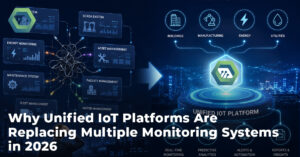
The End of Dashboard Overload Modern enterprises have never had more visibility into their operations. Buildings have Building Management Systems (BMS). Factories use SCADA and PLC platforms. Energy teams monitor utility consumption. Facility managers rely on CAFM and CMMS software. Logistics teams use fleet and asset tracking platforms. Industrial operations deploy hundreds or even thousands of IoT sensors. Yet despite
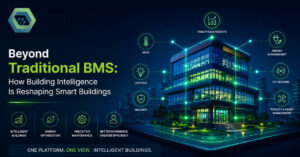
Buildings Are No Longer Just Automated—They’re Becoming Intelligent For decades, Building Management Systems (BMS) have been the backbone of commercial buildings, controlling HVAC, lighting, elevators, and other critical infrastructure. While traditional BMS platforms have improved operational efficiency, today’s buildings demand much more than automation. Modern commercial buildings, hospitals, airports, campuses, hotels, industrial facilities, and mixed-use developments are evolving into intelligent
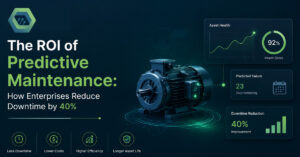
The Costliest Machine Failure Is the One You Never Saw Coming Across manufacturing plants, commercial buildings, utilities, logistics hubs, and industrial facilities, one challenge continues to impact profitability more than almost any other: Unplanned downtime. Unexpected equipment failures interrupt production, increase maintenance costs, reduce asset lifespan, delay deliveries, and negatively affect customer satisfaction. For many organizations, these failures aren’t caused
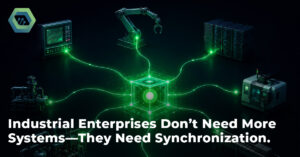
From Fragmented Operations to a Unified Digital Nervous System Industrial enterprises have spent years investing in technology. Factories today are filled with: • Automation systems• ERP platforms• SCADA environments• PLC networks• Energy monitoring tools• IoT devices and analytics software Yet despite all this investment, many operations still struggle with inefficiency, delays, and disconnected decision-making. The issue is not lack of
Every Industry is Digitized. Very Few Are Connected. Digital transformation has become a boardroom priority across industries. Manufacturers have invested in automation.Commercial buildings have adopted smart systems.Utilities have deployed monitoring infrastructure.Logistics companies have embraced digital tracking platforms. Yet despite significant investments in technology, a common challenge remains: Most systems still operate independently. The result is a digital environment filled with

Industrial enterprises are undergoing rapid digital transformation. • Factories are adopting automation.• Buildings are becoming smarter.• Utilities are becoming data-driven. Yet despite significant technology investments, one challenge continues to limit operational performance: Systems remain disconnected. Machines generate data.SCADA systems monitor processes.ERP platforms manage business operations. But in many organizations, these systems operate independently. The result is fragmented visibility, delayed decision-making,
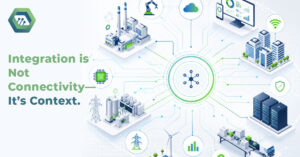
Why Connected Systems Alone Don’t Create Business Value Organizations across industries are investing heavily in digital transformation. Factories deploy Industrial IoT sensors.Buildings install smart automation systems.Utilities implement advanced monitoring infrastructure.Logistics companies digitize fleets and warehouse operations. Yet despite these investments, many organizations continue to struggle with the same challenge: They have data everywhere but intelligence nowhere. The reason is simple.
Smart Waste Management with IoT: Building Cleaner, Efficient Cities Urbanization is accelerating rapidly.Cities are expanding, populations are growing, and with it—waste generation is increasing at an unprecedented rate. Traditional waste management systems are struggling to keep up. The solution lies in Smart Waste Management powered by IoT, where data, automation, and real-time monitoring transform how cities handle waste. The Challenge
Global industries are scaling faster than ever.But with scale comes complexity—multiple machines, systems, locations, and data sources. The real challenge is not operations.It’s integration. Today, the most efficient enterprises are not the ones with the most advanced machines—but the ones with the most connected systems. What is Industrial Integration? Industrial Integration is the process of connecting machines, systems, and data
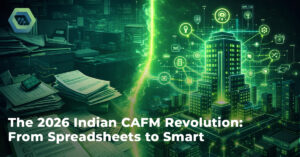
●Facility Management in India is undergoing a massive transformation. What was once managed through spreadsheets, manual logs, and reactive workflows is now evolving into real-time, intelligent, and connected systems powered by CAFM, IoT, and automation. Welcome to the 2026 CAFM Revolution in India. The Shift: From Manual to Digital For years, facility operations in India relied on: • Excel sheets
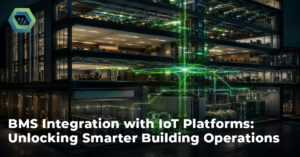
Modern buildings are becoming increasingly intelligent.But intelligence alone is not enough—integration is what unlocks real operational value. Most commercial buildings today already operate with Building Management Systems (BMS).However, many of these systems still function in isolation, limiting visibility, automation, and scalability. By integrating BMS with a unified IoT platform, organizations can transform traditional infrastructure into connected, data-driven smart buildings. What

Modern Facility Management is no longer about isolated systems.It requires a connected digital ecosystem where IoT devices, M2M communication, automation systems, and maintenance workflows operate as one unified infrastructure. OmniWOT delivers exactly that —An enterprise-grade, IoT-enabled CAFM & CMMS platform purpose-built for large, multi-site portfolios. IoT & M2M: The Core of Smart Facility Management Every asset in a facility generates